Investigation of Neuritin Effects in Traumatic Brain Injury
Overview
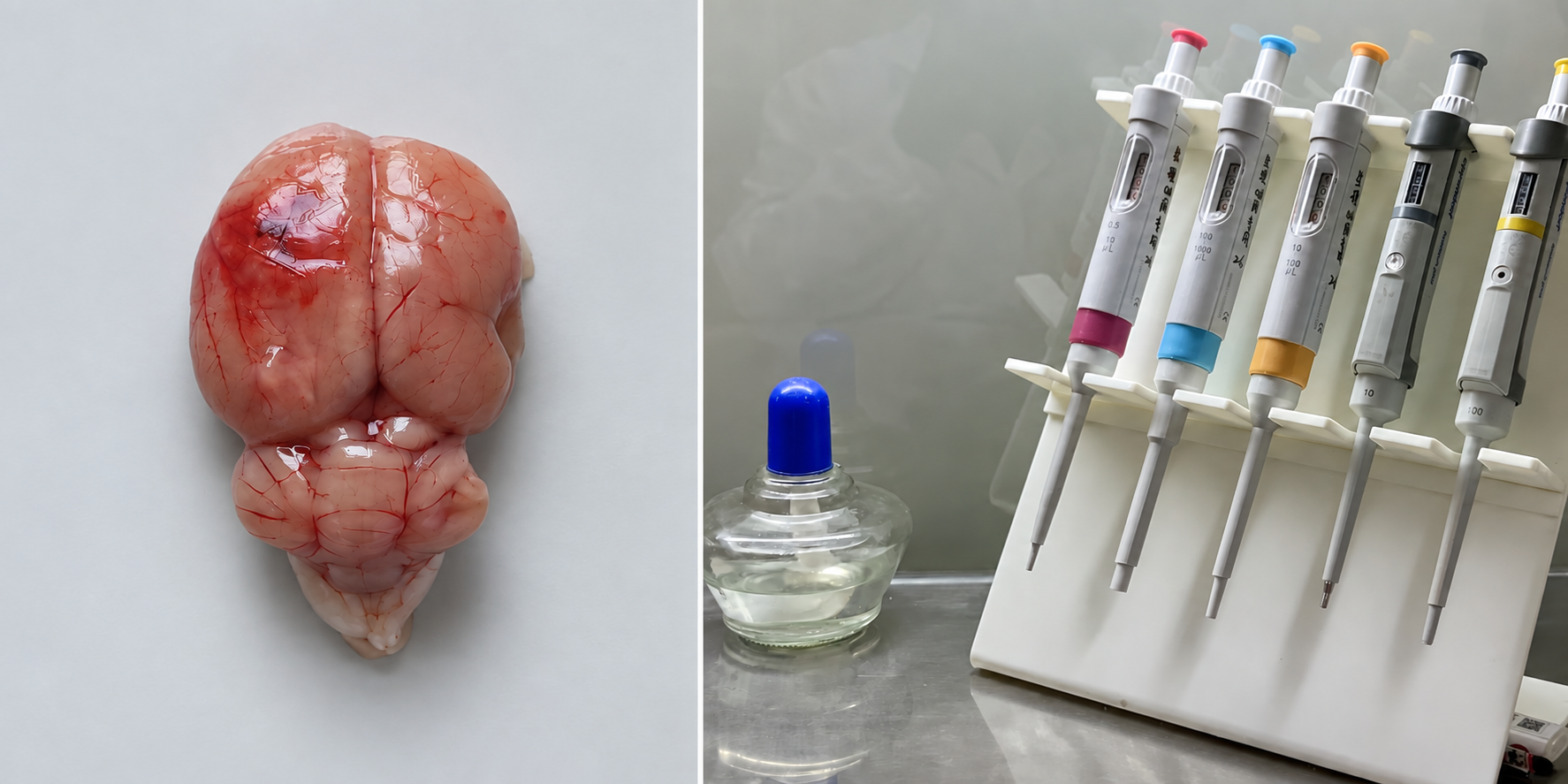
In this project, I investigated how Neuritin affects sensorimotor behavior, learning and memory after traumatic brain injury (TBI).
Background
Neuritin, also known as CPG15, is an activity-regulated protein involved in neuronal growth and plasticity. It supports the growth and branching of neuronal processes and helps synapses mature and remain stable.
In a study of mice lacking CPG15, researchers found delayed development of axonal and dendritic branches, reduced synapse stability and slower learning.
Approach
In rodent TBI models, I used beam-walking and grip-strength tests to assess balance, coordination and strength. Spatial learning and memory were assessed with the Morris water maze.
Behavioral assessment
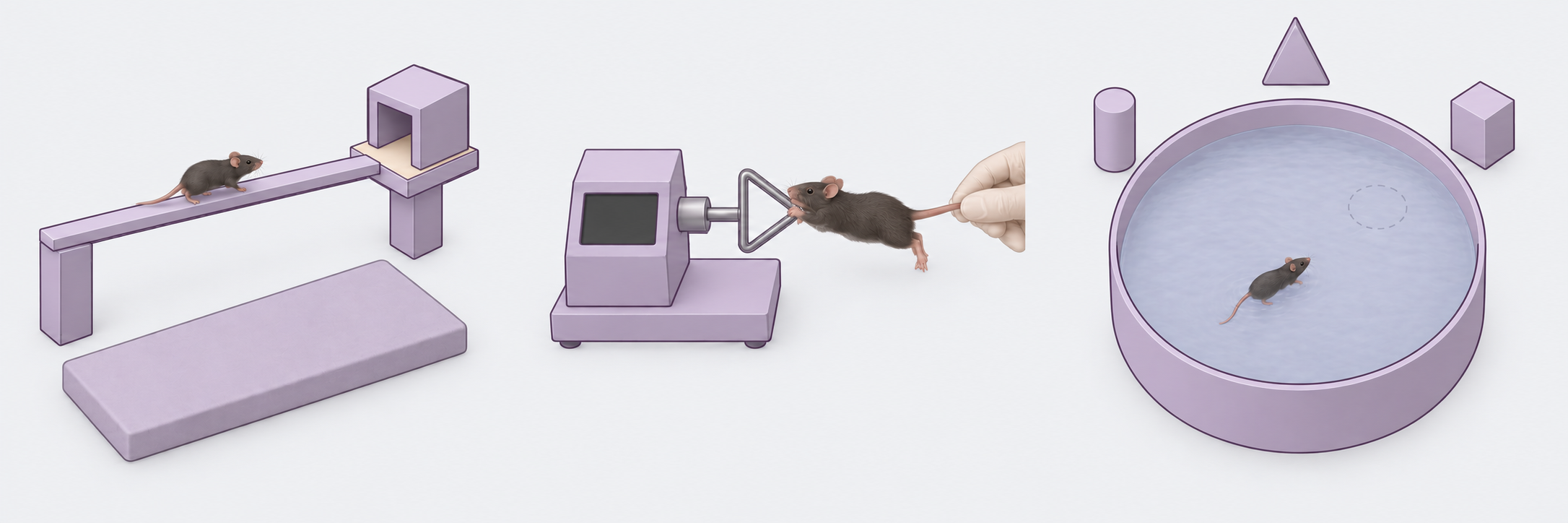
Beam walking
Traversal of a narrow beam
Balance and coordination
Grip-strength test
Force exerted while gripping
Grip strength
Morris water maze
Navigation to a hidden platform
Spatial learning and memory
The project also included experiments with primary neurons and microglia. I analyzed transcriptomic data and predicted miRNA targets to investigate potential regulation of Neuritin, and used molecular docking to explore possible interactions.
Selected results
Differential mRNA and miRNA expression in TBI

Functional enrichment of Neuritin-associated genes

Manuscript
The first manuscript from this project, The perspective of miRNA regulation of Neuritin in traumatic brain injury, is under review at Neurochemical Research.