Modulatory Effects of 4-EG on Cognitive and Affective Dysfunction
Overview
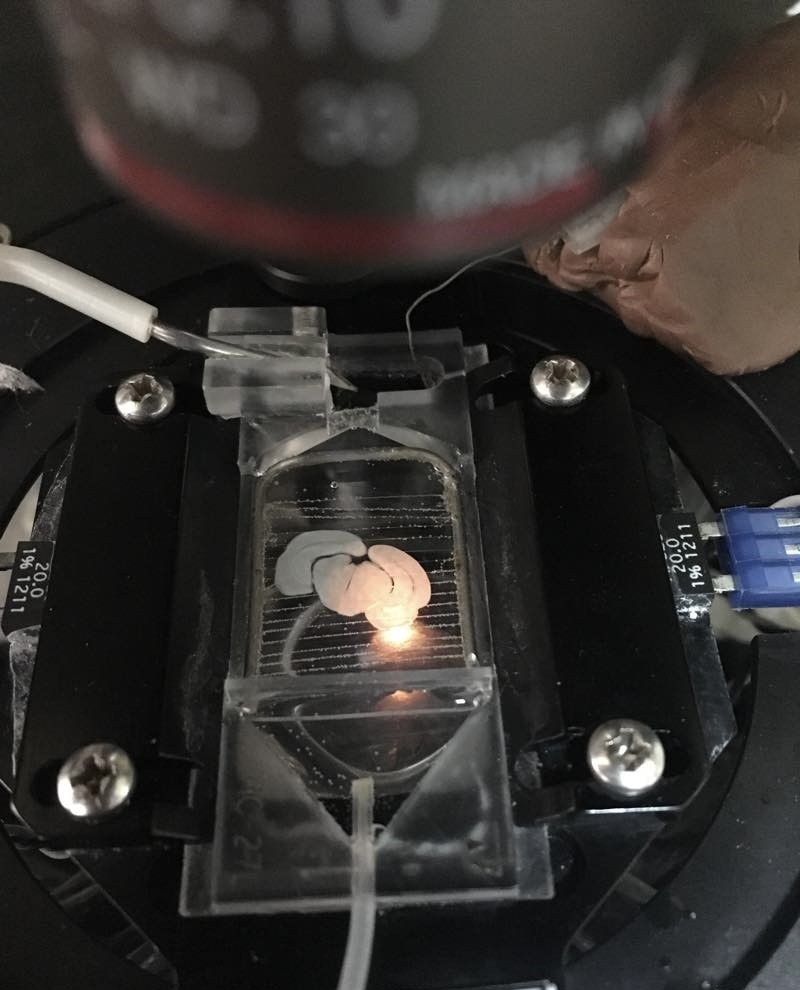
This project examined cognition and behavior in mice with neuroinflammation, including the effects of 4-ethylguaiacol (4-EG). My work combined behavioral testing with tissue and cell analyses.
Research Question
How can behavioral phenotypes and neural cell-state changes be integrated to characterize cognitive dysfunction?
Methods
Behavioral testing sequence
Spatial learning and memory were assessed alongside locomotor activity and exploration.
01Open-field test
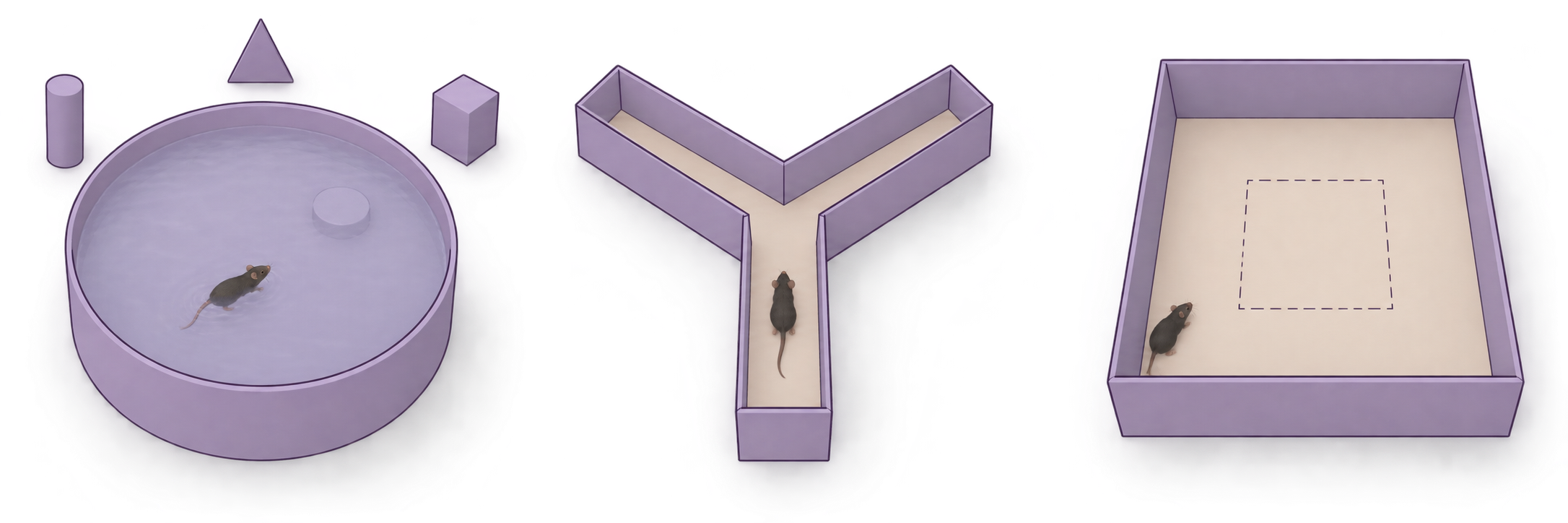
Locomotor activity and exploration
02Y-maze
Spatial working memory
03Morris water maze
Spatial learning and memory
Cellular characterization
Transcriptomic analyses examined gene expression at tissue and cell resolution.
- Bulk RNA-seq
- I examined tissue-level changes in gene expression.
- Single-cell RNA-seq
- I investigated differences among cell populations and their heterogeneity.
Single-cell workflow
- Quality control
- Normalization
- Clustering
- Marker-guided annotation
Method reading: Luecken & Theis, 2019 · Becht et al., 2019 · Seurat guided clustering.
Supporting validation
I also carried out histological, biochemical, and cell-based experiments to characterize neural injury.
Manuscript
A manuscript from this work is under review at Brain Research Bulletin.